Eating at JFK on a Tight Layover Without Missing Boarding
JFK has just 18 restaurants across 5 terminals and a 33-minute Sunday security peak. For a short connection, eat in your concourse, don't chase food airside.
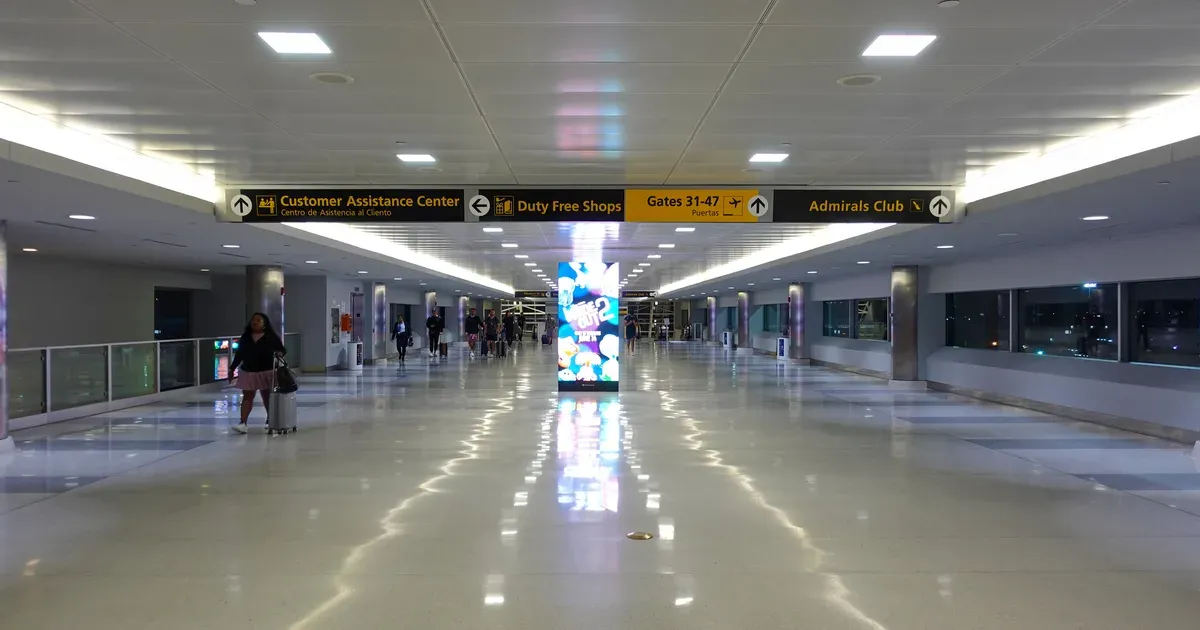
If you’ve got a short connection at JFK, eat in the terminal you’re already in. According to FlyIndex’s data, JFK spreads just 18 restaurants across 5 terminals, with zero quiet TSA hours, so leaving your concourse for better food is how tight connections die. ORD is the opposite case, and it shows why concourse-first is the rule at Kennedy.
Why does chasing food backfire at JFK?
Eighteen restaurants sounds okay on paper. Split it across five terminals and it isn’t.
According to FlyIndex’s data for JFK, the airport lists 18 restaurants and 26 shops across 5 terminals. More shops than food. You feel that imbalance when you’re hungry in the wrong place, with a lot of retail and not a lot of hot food within a two-minute walk of your gate. My read is that JFK was built as five small airports that happen to share a name.
And there’s no soft hour to fix a bad choice. FlyIndex’s TSA data for JFK shows zero quiet slots across the week, with a peak of 33 min on Sundays at 4 PM. Zero. That number changed how I’d plan any food move there. It means you can’t tell yourself you’ll slip out, grab something better elsewhere, and slide back through a sleepy checkpoint. There is no sleepy checkpoint in the dataset.
International arrivals make it tighter. CBP’s records for JFK show the slowest-processed passengers on Sunday 3 PM arrivals typically waiting 81 minutes. If you’re coming off a transatlantic flight in that Sunday bank and thinking about hunting for lunch before a domestic hop, look, you’re already spending your layover in line. The sandwich by your departure gate wins because it’s there.
I’d rather eat a lukewarm slice at my gate than sprint for a better menu and miss boarding by six minutes.
What makes ORD the easier comparison?
Chicago gives you more slack. Quite a bit more.
According to FlyIndex’s data for ORD, O’Hare lists 35 restaurants across 4 terminals, with 9 shops. Flip JFK’s ratio. Nearly double the restaurants in one fewer terminal, and far less retail competing for space. You still shouldn’t wander aimlessly, but the odds that something decent sits near your gate are higher. That’s my favorite kind of airport math. It’s boring, obvious, and useful.
The security shape helps too. FlyIndex’s TSA data for ORD shows a peak of 30 min on Sundays at 3 PM, pretty close to JFK’s 33 min on Sundays at 4 PM, but ORD logs 28 quiet slots across the week while JFK logs zero. ORD’s calmest windows cluster at 2 AM, 1 AM and 10 PM in the data. Those aren’t lunch hours, obviously, but they tell you the checkpoint breathes. JFK, in this dataset, doesn’t.
Here’s the side-by-side I keep coming back to:
| JFK | ORD | |
|---|---|---|
| Terminals | 5 | 4 |
| Restaurants | 18 | 35 |
| Shops | 26 | 9 |
| TSA peak | 33 min on Sundays at 4 PM | 30 min on Sundays at 3 PM |
| Quiet slots | 0 | 28 |
| Immigration average (CBP) | 22 min | 17 min |
Don’t over-read the immigration row. Averages hide the slow flights. On Sunday afternoon arrivals, the slowest-processed passengers typically waited 81 minutes at JFK and 47 at ORD, so neither one lets you dawdle after a long-haul arrival. The difference is what happens after you clear. At ORD you’ve got 35 options spread over fewer buildings and a checkpoint that quiets down sometimes. At JFK you’ve got 18 options spread over more buildings and no documented lull.
If you want to see the gap in plain English, compare the JFK restaurants list with the O’Hare restaurants list. One reads thin per terminal. The other reads like you can afford to be picky.
So where should you actually eat when time is tight?
Pick by concourse, not by craving.
My blunt rule for JFK is that once you’re airside, you’re done shopping for food. Check what’s past your security checkpoint and choose the closest hot thing you can carry. A sandwich you can fold into your bag beats a sit-down meal you have to abandon when they call Group 3. Your mileage may vary on taste, but you won’t vary on making the flight, which is the point.
A short-connection playbook that works:
- Land, check the gate first, food second. Don’t stop at the first coffee counter in arrivals if your departure is two terminals over. Get airside where you belong, then look around.
- Use the terminal page before you land. The JFK terminals guide plus the restaurant list tells you whether your concourse even has a real meal or just snacks, so you know if you need to grab and go fast.
- Carry it. If the line at the one decent counter is eight deep and your boarding time is close, pivot to the grab case. Speed is the cuisine on a tight layover.
- Drink water early. Cups are slow. Fountains aren’t.
At ORD you can loosen up a little. With 35 restaurants across 4 terminals, I’d still eat near my gate on a short turn, but I wouldn’t panic if my concourse looked weak, since the density means the next pier over is more likely to help, and those 28 quiet slots mean a re-clear doesn’t automatically doom you. At JFK, with 5 terminals sharing 18 spots and zero quiet slots, that same gamble is kind of reckless. Stay put.
One more thing. Don’t trust memory. Menus turn over, counters close for remodels, hours shrink after 8 PM. The airport’s own site and the FlyIndex hub pages are fresher than whatever list you saved last year. I check the John F. Kennedy International Airport hub the morning I fly, just to confirm which terminal I’m actually in. Terminal confusion at JFK wastes more time than food lines.
How do security and immigration change the math?
They turn a food run into two lines, not one.
Say you leave your JFK concourse for a better lunch on a Sunday. FlyIndex’s data puts the TSA peak at 33 min on Sundays at 4 PM, and there are zero quiet slots to hide in. You stand in line to get back in, and that line has no reliable off-hour. Same story, slightly softer, at ORD, 30 min on Sundays at 3 PM, but at least 28 quiet slots elsewhere in the week. If you must move at O’Hare, a 10 PM departure bank is calmer than a Sunday afternoon one. At Kennedy, don’t assume any hour will save you.
Immigration stacks on top for connecting international passengers. The slow end of the passport-control line, 81 minutes on Sunday 3 PM arrivals at JFK and 47 on Sunday 4 PM arrivals at ORD, is a clock problem. You can’t eat that time back. If your inbound lands inside that window, your connection is already a security line plus an immigration line plus a walk, and food has to fit in the cracks. That’s when the JFK TSA wait times page helps with dining by talking you out of leaving the gate area.
On a tight connection, stay airside. With a longer sit, you can explore.
Grab the slice by your gate. Save the food adventure for Chicago.
Frequently asked questions
Can I switch terminals at JFK for better food on a short layover?
Don't. JFK has only 18 restaurants across 5 terminals and zero quiet TSA slots in FlyIndex's data, with a 33-minute peak Sundays at 4 PM. If you leave your concourse you'll likely have to re-clear security with no calm hour to count on.
Is eating during a connection easier at ORD than JFK?
Yes. ORD lists 35 restaurants across 4 terminals and 28 quiet slots, while JFK lists 18 restaurants across 5 terminals and zero quiet slots. Chicago gives you more choices without leaving your area; Kennedy punishes the walk.
When is security worst if I leave my gate area to eat?
Sunday afternoon is the pinch. FlyIndex's data puts JFK's TSA peak at 33 minutes Sundays at 4 PM and ORD's at 30 minutes Sundays at 3 PM. Midday Sunday through early evening is the worst time to gamble on a terminal change.
What if I am hungry after an international arrival?
Eat after you clear immigration, not before you plan anything tight. In CBP's records, passport control averaged 22 minutes at JFK and 17 at ORD, and the slowest-processed passengers on Sunday afternoon arrivals typically waited 81 minutes at JFK and 47 at ORD, so an international-to-domestic connection already eats your buffer before food enters the picture.
Sources
- TSA Security Screening
Transportation Security Administration · tsa.gov
- JFK Airport
Port Authority of New York and New Jersey · jfkairport.com
- O'Hare International Airport
Chicago Department of Aviation · flychicago.com
Keep reading
 diningJFKORD
Where to Get Coffee at JFK Before an Early Flight Out
JFK has 18 restaurants across 5 terminals and a 33-minute Sunday TSA peak. Buy coffee airside after security, and see why ORD's 35 restaurants ease mornings.
FlyIndex Editorial diningJFK
JFK Terminal 7 Food: Coffee, Burgers and Arrivals Dunkin’
Find JFK Terminal 7 food by security side, from the arrivals Dunkin’ to the Level 3 food court, with published hours for three nearby choices.
FlyIndex Editorial diningJFK
JFK Terminal 1 Food After Security: Gates 1–7 Compared
All 14 places to eat or shop after security in JFK Terminal 1, gate by gate with published hours, plus what’s only in the Level 4 food court before the checkpoint.
FlyIndex Editorial