Use Immigration Wait Data to Pick Your International Flight
A year of CBP records shows the arrival hour often moves your customs wait more than the airport does. Use it to pick a landing time with a shorter line.
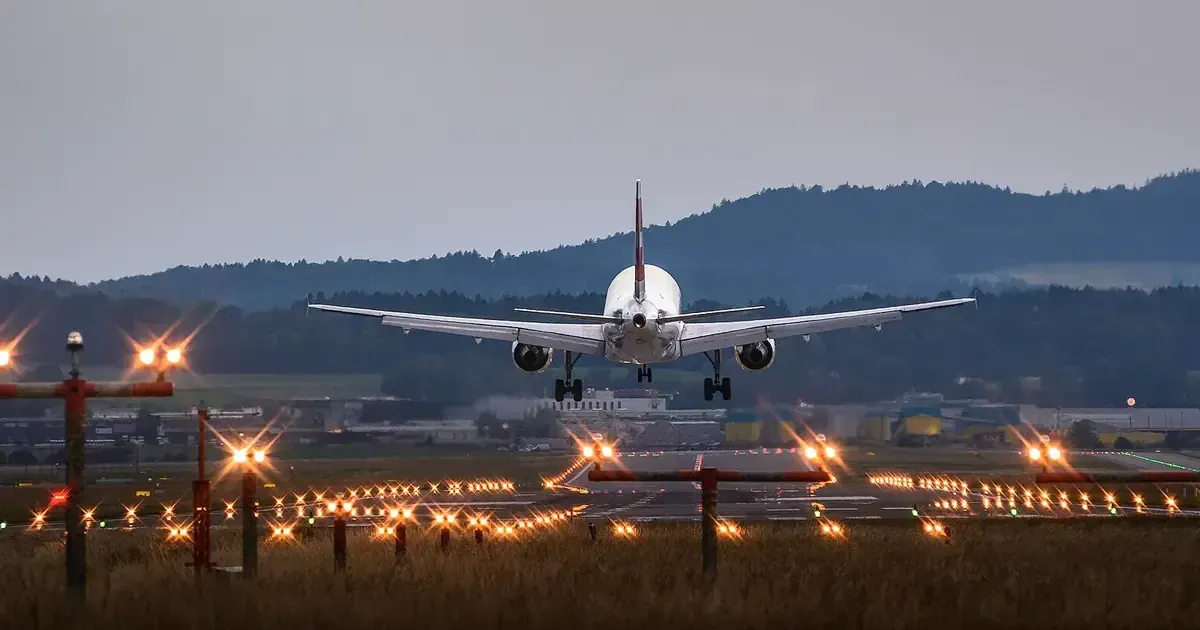
The customs line feels like weather, since you land, you queue and you accept whatever the hall gives you. But CBP records how long every international arrival waited at passport control, flight by flight, and publishes it through its Airport Wait Times service. FlyIndex compiles a year of those records, September 2025 to September 2026, for 42 U.S. airports.
The airport lever is smaller than you’d think
Start with the averages, across every passenger who landed in the year:
| Airport | Average wait | Slowest regular arrival window |
|---|---|---|
| JFK | 22 min | Thursday, 5 AM |
| MIA | 21 min | Thursday, 11 AM |
| LAX | 21 min | Friday, 8 AM |
| SFO | 19 min | Saturday, 10 AM |
| ORD | 17 min | Wednesday, 3 PM |
| SJC | 16 min | Tuesday, 10 AM |
| ATL | 8 min | Monday, 8 PM |
There is a real spread at the top end. Atlanta averaged 8 minutes with nearly 18,000 international passengers landing a day, and JFK averaged 22. If you are choosing between a connection through Atlanta and one through JFK, customs is a genuine reason to pick Atlanta.
Between neighbours, the gap shrinks. The SFO immigration wait times average 19 minutes. The San Jose immigration wait times average 16. Three minutes is not worth a worse schedule or a longer drive, and San Jose has slow windows of its own: flights landing Tuesday at 10 AM averaged 29 minutes there.
The arrival-hour lever is the big one
If you can move one variable, move the hour. Within a single airport, the slowest and quickest arrival hours are further apart than most airports are from each other.
At SFO, flights landing at 9 AM averaged 23 minutes and flights landing at 11 PM averaged 11. At LAX, the 7 to 9 AM arrivals averaged 25 to 26 minutes and the 5 and 6 PM arrivals averaged 16. At JFK, the 5 and 6 AM arrivals averaged 29 minutes and the 6 PM arrivals averaged 17.
Much of that is the overnight long-haul bank, since flights that cross the night land in the early morning and the hall absorbs them together. That makes the popular early-morning arrival the slow one.
It is not a universal rule. At O’Hare, the slowest hour was 3 PM. At Atlanta, the evening arrivals from 6 to 8 PM were the slowest, though even those averaged 9 to 10 minutes. The only reliable method is to check the airport you are landing at.
The day-of-week lever
Sunday has a reputation as the worst day to land. The CBP data says the opposite at the biggest gateways: Sunday was the quickest day of the week at JFK, Miami, LAX, O’Hare and Newark. The slow days were midweek and Friday. Thursday was the slowest at JFK, Miami and Newark, and Friday at LAX.
The differences are smaller than the hour-to-hour ones. JFK averaged 19 minutes on Sundays and 25 on Thursdays. Miami averaged 18 and 24. But if your dates are flexible, it’s another few minutes in your favour.
The line you’ll actually stand in
Every number above is an average across all passengers, and the hall has two lines. At JFK, U.S. citizens averaged 13 minutes and non-U.S. citizens averaged 34. At LAX it was 13 and 30. At Miami, 14 and 28.
If you are visiting the U.S., expect roughly one and a half times the headline average at the big gateways, and check the citizenship split on the airport’s page. If you are a U.S. citizen, the averages you care about are well under a quarter of an hour at most of the busiest airports.
The connection angle
This matters most when you’re connecting. The immigration wait times for your arrival airport are the first half of the connection math, and the TSA line on the re-screen is the second. A 5 AM landing at JFK and a 6 PM landing are 12 minutes apart on average, before the slowest passengers are counted. On those flights, the slowest-processed passengers typically waited 80 minutes or more at 5 and 6 AM.
The thirty-second lookup
The process is short enough to do on every international trip:
- Open the immigration wait times page for your candidate arrival airports.
- Find the hour your flight would land, on the day you’d land.
- Compare the average and the slowest-passenger figure across hours and across airports.
- If the gap is big, change one variable. The hour first, then the airport.
The data is free and specific to your exact landing, and it takes less time than comparing seat maps.
The honest version
The immigration line is not random, and it’s not the same everywhere. The biggest difference between two landings is usually the hour, then the airport, then the day. The early-morning bank at a coastal gateway is the slow one. The same airport in the evening is a different experience. And an average of 8 minutes at Atlanta against 22 at JFK is a real difference when you are choosing a connection.
Almost nobody checks this before booking, which is why it’s worth the thirty seconds.
Frequently asked questions
How do I avoid long customs lines?
Check the arrival hour before you book. At most big gateways the spread between the slowest and quickest hours is larger than the spread between airports. At SFO, 9 AM arrivals averaged 23 minutes and 11 PM arrivals 11, in CBP's records for September 2025 to September 2026.
Which big airports have the shortest customs lines?
Among the busiest gateways, Atlanta, by a wide margin. Its average passport-control wait was 8 minutes across the year, against 22 at JFK, 21 at LAX and Miami, and 19 at SFO.
What is the best time to arrive internationally in the U.S.?
It depends on the airport, which is why the lookup matters. At JFK, LAX and SFO the morning banks are the slowest, and evening arrivals clear faster. At JFK, Miami, LAX, O'Hare and Newark, Sunday was the quickest day of the week.
Does it matter which airport I fly into for customs?
It can. Atlanta averaged 8 minutes and JFK 22, a gap of 14 minutes on an average landing. Between nearby airports the gap is often smaller: San Jose averaged 16 minutes and SFO 19.
Sources
- Airport Wait Times
U.S. Customs and Border Protection · awt.cbp.gov
- San Francisco International Airport official website
San Francisco International Airport · flysfo.com
- Norman Y. Mineta San Jose International Airport official website
Norman Y. Mineta San Jose International Airport · flysanjose.com
Keep reading
 strategyJFKLAX
Is Global Entry Worth It? What the CBP Wait Data Shows
CBP data puts the average U.S. citizen's passport-control wait at 13 to 15 minutes at the biggest gateways, and flags the slow windows where Global Entry pays off.
FlyIndex Editorial strategyDENJFK
What Moving Your Flight One Hour Actually Saves You
At Denver, shifting one hour earlier cuts 30 minutes off the line. At JFK it saves four. The one-hour shift is worth wildly different amounts by airport.
FlyIndex Editorial strategyLAXMIA
The Red-Eye Is the Only Flight Without a Line
TSA data across major U.S. airports shows overnight hours are the quietest of the week. A red-eye trades sleep for an empty checkpoint at LAX, MIA, ORD and ATL.
FlyIndex Editorial